 Strut Eight
Poetry and Collective Writing
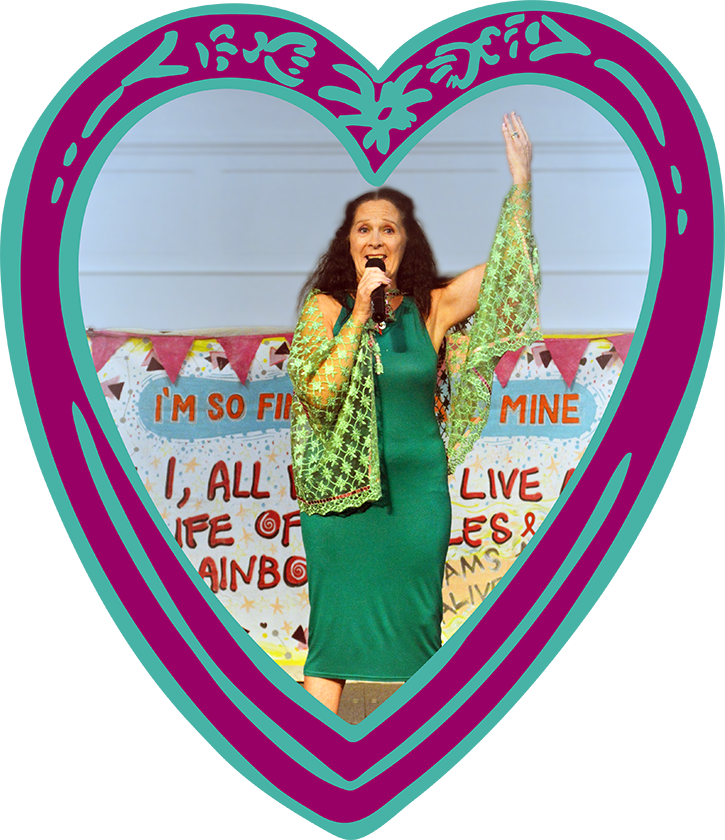
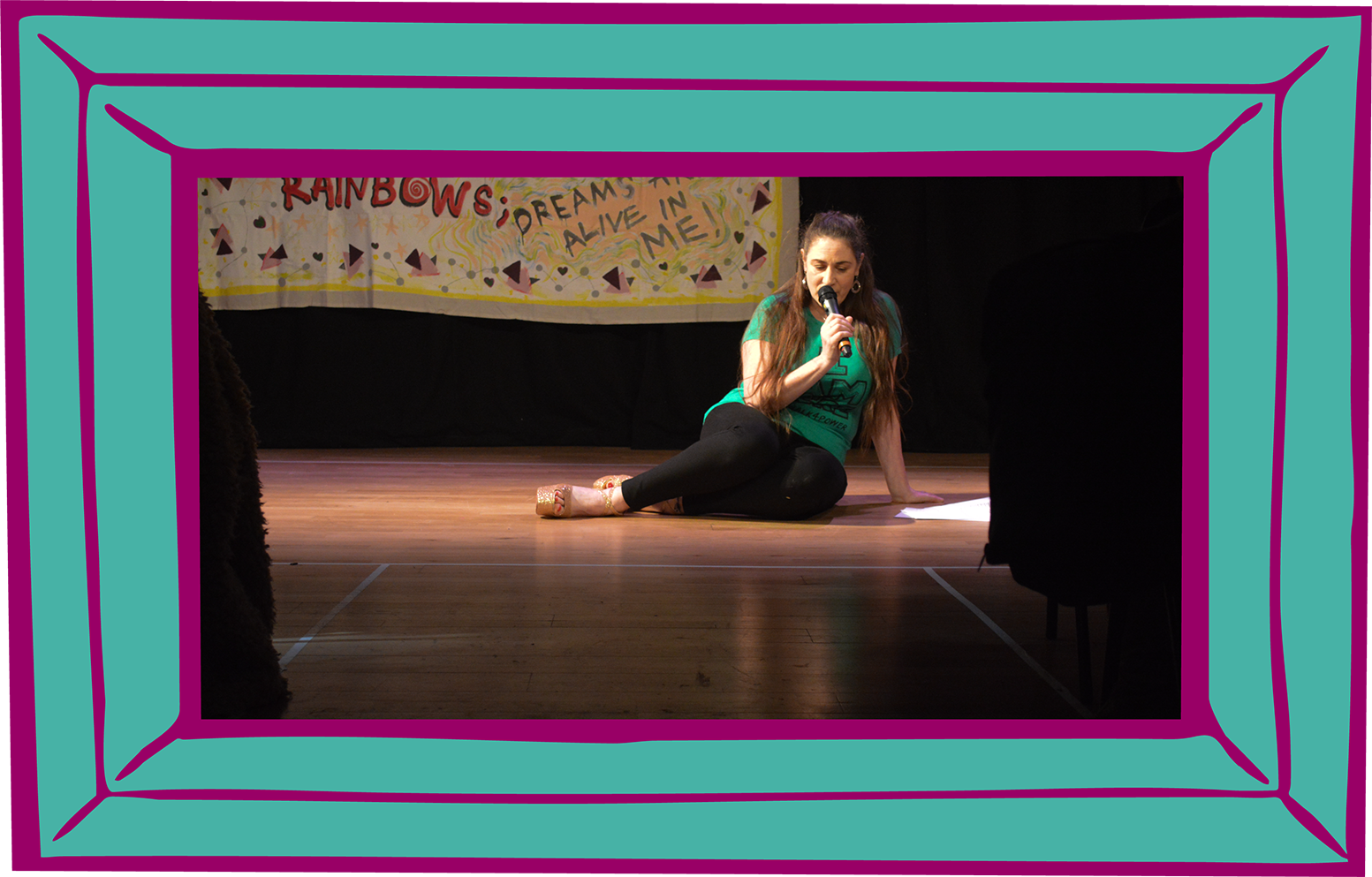
This Strut is about how to share our stories and key messages through collective poetry and positive affirmations.
Our voices have been silenced, so it is an empowering act to speak our truth, ask for what we need, and rewrite the narratives that we share about ourselves. However, it can be daunting to be asked directly to create poetry, so this workshop encourages expression (in any language) and builds confidence gradually. Often women have been inspired to write in their own time following this introduction. (Read a poem by Sue from Brighton, UK.)
“If you wish to influence an individual or a group to embrace a particular value in their daily lives, tell them a compelling story.” - Annette Simmons
The workshop begins as others with a group agreement, introductions and an ice breaker, plus an overview of the history of Catwalk4Power.
Start with a brief description of the structure of the workshop and describe how collective poetry is made. We have used word wheels . Encourage people to think about all the senses when describing something: how does it taste…smell…feel? We should not worry how something sounds in our heads. Instead, ask people to allow themselves to just write what flows.
1) Writing Warm Up:
Try a writing warm-up exercise:
- Ask participants to write non-stop for three minutes
- Encourage them to put down on paper everything and anything that comes to mind, without punctuation, grammar or spelling rules. All rules are suspended!
- Ask people how the exercise was for them and whether anyone wants to share.
1) Key messages
Sheets are placed around the room with a title of: “what do we want to say to …”. (We addressed this question in a similar way, in Strut 5.) Each woman is given post-it notes and asked to add their comments to the sheets. This can be an exercise where women move about the space, from one sheet to the other, commenting with notes, allowing reading and translations. It is important to say if you feel what you want to say is already there. Write it again anyway. Every voice is valid. There’s no wrong way. These sheets can be left up for the duration of the workshop, so messages can be added throughout the day.
At the end of the workshop, these messages can be collected by the facilitator and written up to construct a shared spoken word piece. If time allows, participants can take charge of arranging the messages, therefore forming an awareness of how prose can be collected together.
2) Powerful Poetry
To demonstrate what can be achieved with few words, the next stage of the workshop can involve sharing a video of someone delivering a moving speech, or the facilitator can read some poetry from previous workshops.
Examples:
Oprah’s 2018 Golden Globes acceptance speech
Collective poem with Bakita KK
‘I am here poem’ (Mel Rattue)
‘And Still I Rise’ (Maya Angelou)
‘I Rise’ (Catwalk4Power collective poem)
The activity of reading, watching, and hearing another’s inspiring words, can stir the emotions and get the creative juices flowing. It also illustrates, effective use of pauses and how projection and building momentum and narrative can be used. Asking people what worked, what didn’t, and what messages were said, will all spark discussion.
3) Writing Affirmations
A key element in our Catwalks is for strutters to say affirmations, such as “I am here, I am powerful!” etc. These are very effective for instilling a sense of worth and shifting the internalised stigma many women living with HIV feel.
The opportunity to sit and reflect on our roles and attributes and then write them down, can be offered with the suggestion that participants start with writing “I am…” and see what arises. However, this can be difficult initially and so the following exercise can be very effective when combatting that negative, critical voice we all have, that whispers or shouts “No you’re not!”.
- All women sit opposite a partner in a line, so they are facing each other, one line is A the others are B
- The facilitator has a timer and explains that only A’s are going to talk for 3 minutes while B’s listen. Then when the timer goes again B’s have to repeat to A’s what they heard while A’s listen.
- A’s are instructed to say all that they see and know of B that is good, for example “you have beautiful skin, you’re a caring mother”
- B’s are instructed to share “I have beautiful skin, I am a caring mother…etc”
- Everyone is then invited to move around to a new partner, and then B’s begin with A’s repeating,
- This can continue, as time allows and ends with returning to original pairing where B then shares with A.
Writing “I am…” after this exercise really promotes self-awareness and value, it is an opportunity to embody new ideas, and truly feel them. It is another key strut towards empowerment.
4) Closing session
There will be lots of questions and ideas floating around at this stage. The costume making will be in process, and the venue and invitations planned, so it is important to have time to answer any queries or concerns and build excitement and anticipation.
Ensure you leave at least 10-to-15 minutes at the end of the workshop for participants to share how they are feeling. It follows the theme to end with inviting each woman to say “I am …..” and perhaps even stand up individually to experience taking up their space and owning the words.
Workshop framework:
Suggested time: 2.5-to-3 hours (two facilitators)
Workshop introduction Catwalk4Power overview: 5 mins
Safe space charter - 5 minutes
Group introduction (all women, around the circle): 10 mins
Explanation of activities -10 minutes
Writing Warm Up exercise - 20 minutes
Key messages - 20 minutes
Collective Poetry - 45 minutes
Writing affirmations - 20 minutes
Closing session - 15 min

The main aim of this workshop is to inspire, so that sharing our unique voice is experienced and achievable. Everyone will have a different level of literacy, so it is important to be aware that there may be some prolific writers who will revel in the opportunity and others who may need more coaxing. Some of the quieter voices in the room might have the most profound thoughts and words to share.

When listening to ‘raw’ poetry, strong emotions can rise up, especially when a personal story is shared that participants connect to. Poetry can connect us to feelings that were perhaps buried deeply. If we are allowed to experience them in a safe and supportive space, change can happen. Tears are healing, when we are moved by a creative piece. Expressing our emotions, enables us to grow.