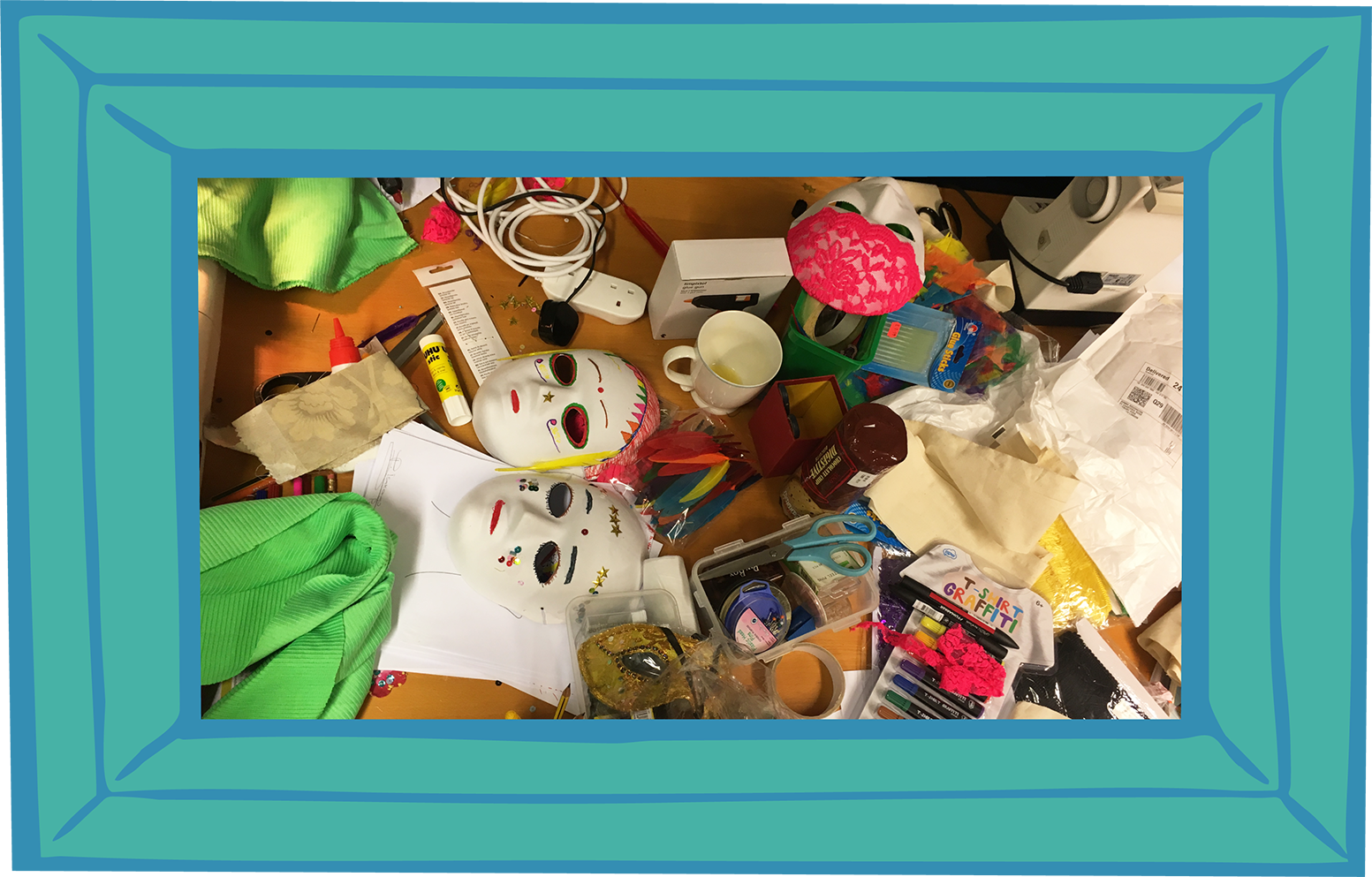
 Mask making and make-up design
Reimagining ourselves ‘glammed-up’, in a semi-disguise of make-up artistry or behind decorated masks, brought about tactics for dealing with stigma and visibility issues.
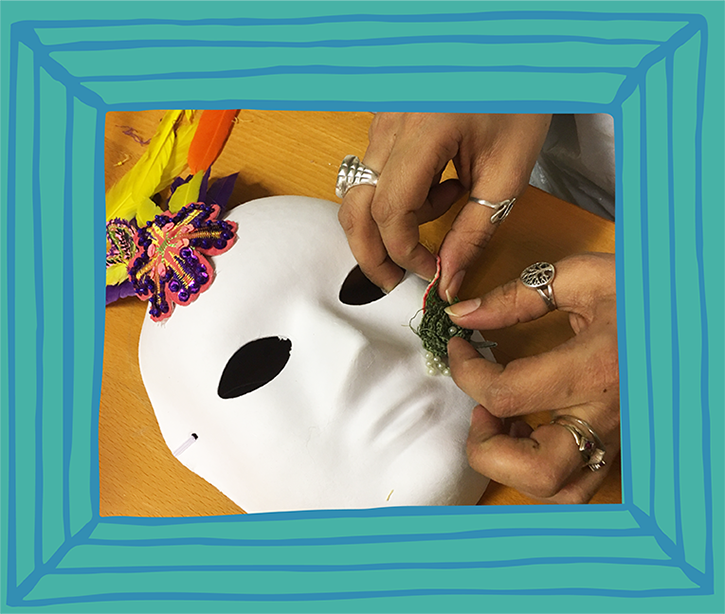
One of the earliest creative workshops we engaged in as a group, involved designing and creating make-up styles and masks. Back then, the idea of ‘presenting ourselves’ or performing in public seemed like very new territory for many of us. We were trying to work out how we might deal with issues of self-stigma, invisibility, personal safety, and choices over how to be seen in public.
The idea of designing a make-up look helped us to visualise ourselves wearing contemporary, theatrical, or tribal styles; different to what we were used to in our day-to-day lives. It was a way of abstracting or role-playing ‘a look’ we might decide to wear in a catwalk performance. As for the mask designs, these provided an extra level of barrier, as we could obscure our faces fully or maybe just the upper half, with eye masks. We decorated the masks with sparkles, feathers, small gems, coloured paper, and so on.
As a starting point, each woman in the workshop was given a few pages of blank face and mask templates. You can access these here.
We sat around long tables pushed together. Down the middle of the connecting tables we scattered coloured pencils and felt tips. While we drew and coloured our designs, we played music, chatted, and watched slide projections of women wearing all kinds of model make-up, theatre-style faces, carnival or masquerade masks, tribal markings, and protest face paint. We had collected these projected examples earlier from the web to help inspire some of our creative choices. The drawings created in this workshop session can be seen here. These designs were assembled together and published in a fold-out zine.
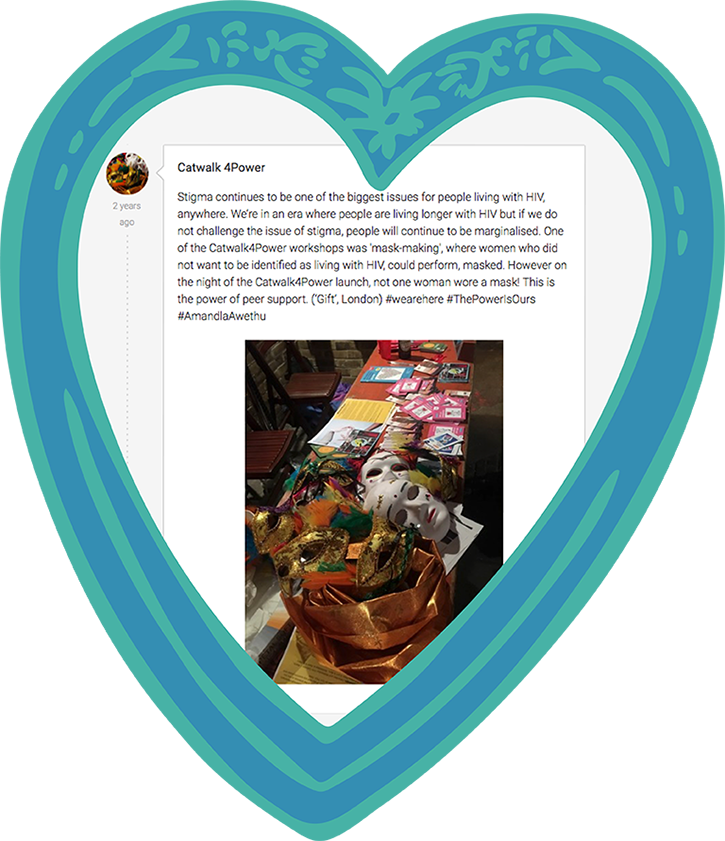
In later workshops, collaging materials were made available so that women could build the masks they drew. You can see an image of these on this page, accompanied by a crowdfunding message written by Gift, who mentions how masks were created as part of a process toward building self-confidence. Ultimately, the masks weren’t worn at the main event, as women had grown more confident in themselves, with their peers, and in the public space we had created together.
Some of the items we used for collaging included:
- Felt fabric
- Various fabric off-cuts
- Recycled jewellery, sequins, beads, and buttons
- Embroidery thread
- Unravelled yarns
- Mixed papers, including old magazines and printed materials
- Coloured pens/pencils/paints
- Feathers, ribbons, and boa strips
- Recycled lace and trimmings
- Glue, tape
On our 2018 JustGiving site, Catwalk4Power member, ‘Gift’, wrote this post:

“Stigma continues to be one of the biggest issues for people living with HIV, anywhere. We’re in an era where people are living longer with HIV but if we do not challenge the issue of stigma, people will continue to be marginalised. One of the Catwalk4Power workshops was 'mask-making', where women who did not want to be identified as living with HIV, could perform, masked. However on the night of the Catwalk4Power launch, not one woman wore a mask! This is the power of peer support.” (‘Gift’, London) #wearehere #ThePowerIsOurs #AmandlaAwethu