 Making Markets
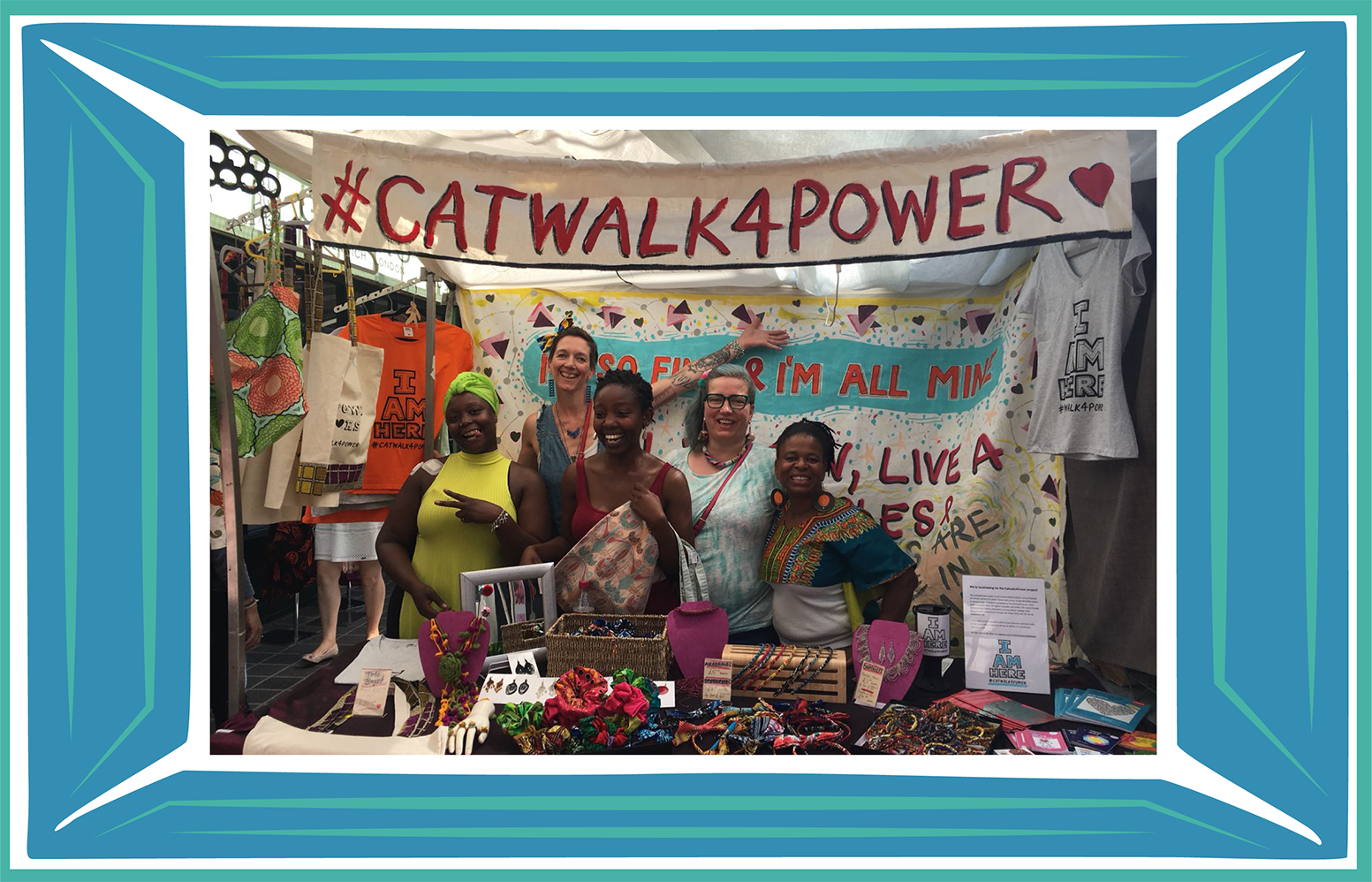
Market stall trading and creating goods to sell, has enabled us to self-fund special projects within Catwalk4Power.
A combined Catwalk4Power workshop and stage show was selected for the AIDS2018 International Conference programme, to take place on the community stage within the Global Village. Exciting as this news was, we had to act fast to work out how to fund this new venture, which included London to Amsterdam travel expenses for most of us. Only one of us received a part-funded AIDS2018 bursary.
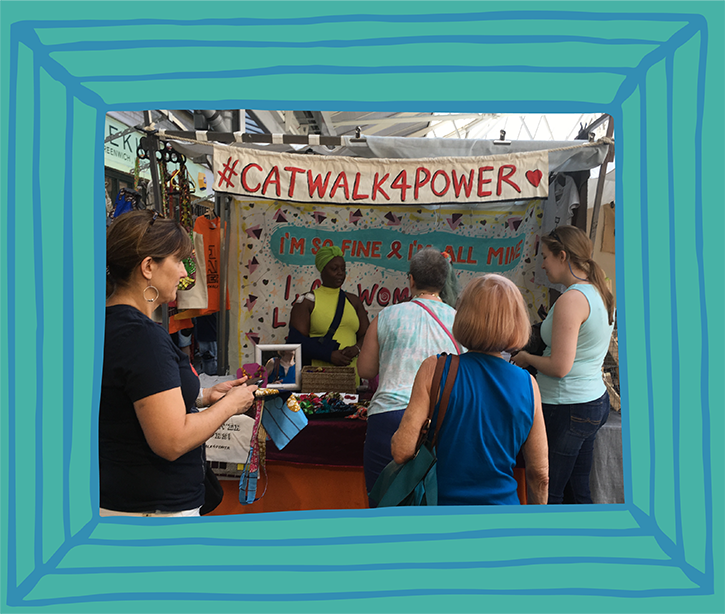
One of our strategies was to make and sell items. We had already started another initiative to sew, print, and sell Catwalk4Power tote bags and also screen print T-Shirts by hand. Catwalk4Power ally, Mare, has a small craft business and she trades at Greenwich Market. She contacted Greenwich Market management and asked if it would be possible to run Catwalk4Power stall for fundraising and awareness building. The response was very supportive and we were offered several free trading days for a Catwalk4Power stall. (It’s a good idea, to check with your local farmers market or craft market management, to see if they offer special terms or reduced rental for community groups doing local outreach.) We explained to our market manager contact what the Catwalk4Power project is and why it is important to raise greater public awareness about the lives of women living with HIV. We told them that the stall would have two intentions: 1) it would be a point of contact stand, displaying brochures about HIV issues and offering informed advice, and; 2) we would sell our product lines of accessories and crafts, that we had created locally ourselves, to raise funds for our Amsterdam trip and AIDS2018 performance costs.
To prepare for the stalls we organised informal workshops at women’s homes. In these environments, we shared days and evenings of laughter, food, plans, and creative making. It was very important to all of us, that everyone in this group could participate. Women donated materials, time, and skills. Charity taught us all how to decorate bangles and hairbands with strips of African fabrics. She sewed many canvas bags, which were then screen-printed with C4P designs by Donna, along with batches of Catwalk4Power T-shirts. Mare sewed hair-scrunchies and bows for hairbands. Longret donated bags sewn by her sister. While we were making, we talked about the importance of being planet-friendly and ethical with our process of how we created products and then sold them in a sustainable, slow production way.
Preparing for the market day
Find out from the market manager, what they provide and what traders are required to bring along, to set up their stalls (some markets have established guidance on this). Greenwich Market provides a stall frame and a table. Some markets only provide a space and you need to bring everything with you, including the table and gazebo.
Setting up our Greenwich Market Stall
We brought with us:
- Fabric for the table and more for a backdrop
- Hangers, hooks, and short railings on which to hang the T-shirts and bags
- Big clips and strong cord to secure whatever we would hang
- A Catwalk4Power sign to stretch above the stall
- Printed information about the project
- Pen(s) and spare paper
- Boxes or containers to act as display plinths (covered by extra table cloths)
- Price lists and sales lists
- Change money and a safe box (or secure money belt)
- An optional card payment facility
- Donations box
- All the craft items we made to sell
- HIV information leaflets and brochures
Many of the things we needed were borrowed or taken from our homes.
Market day
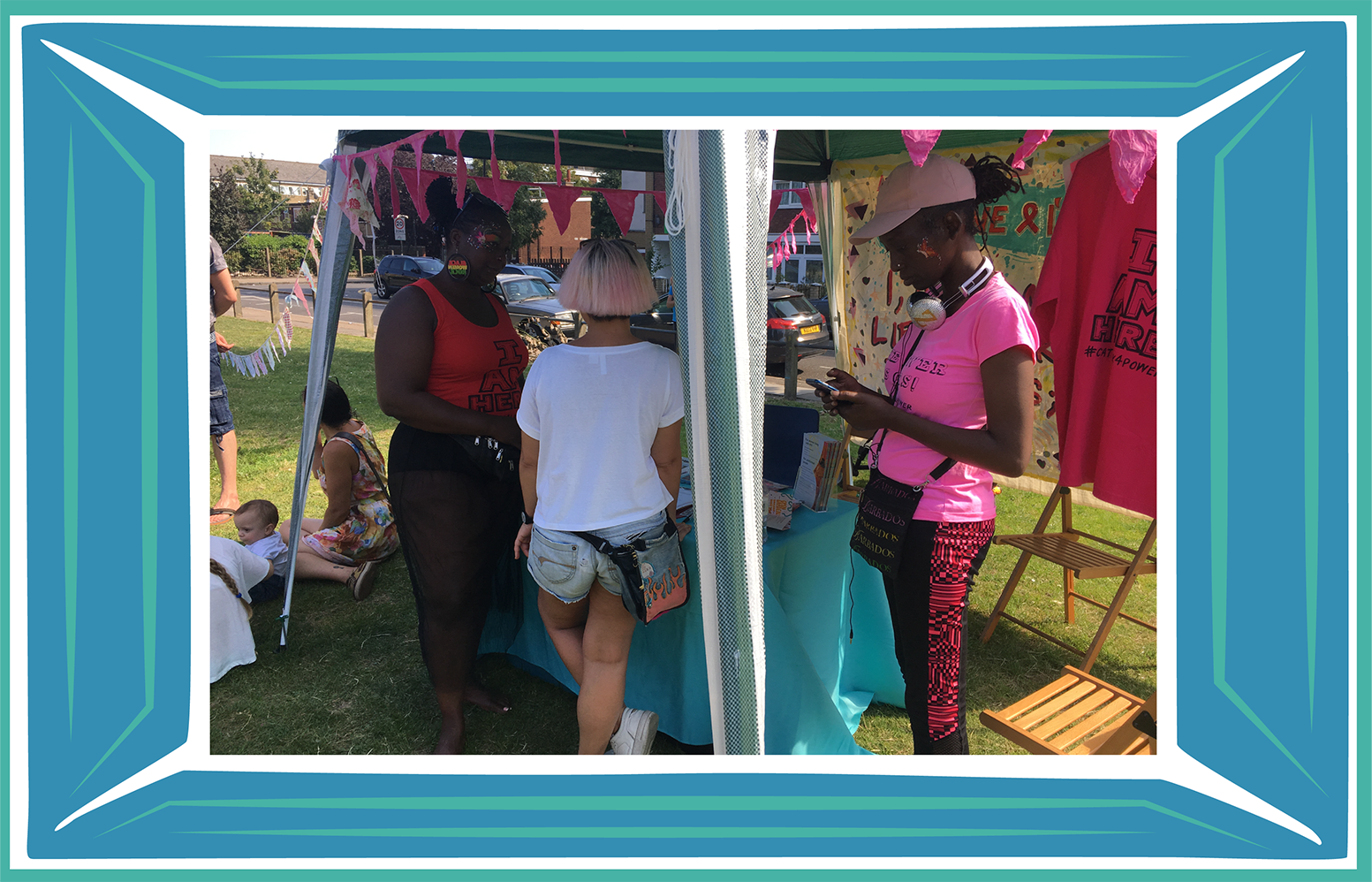
We arrived at the market at 8.30am. Between 8.30 and 10.00am we set up the stall and made new connections with other regular market traders. We divided our stall into two clear areas: 1) the awareness zone stocked with information leaflets, and; 2) the fundraising zone with goods for sale. Before beginning to trade, we discussed how to approach people and inform them about the Catwalk4Power project and the issues. Throughout the day, most people who engaged with us responded positively to our stall. We had some long conversations and learned that most people have very limited knowledge about HIV, especially how it affects so many women. We discussed with the public, issues around HIV stigma, prevention, PreP, and U=U. We were really happy to connect with members of the public this way and also very proud to sell some of the items we made.
Not all of our markets have had the aim of selling items. Sometimes we create market stalls that are purely about awareness raising. In these cases, we have sometimes offered a questionnaire to the public about HIV and then used that to start a conversation with someone, sharing our knowledge about HIV and women’s lives.

When contacting market managers and organisers, it is important to tell them about your group and be clear about what you would like to do with your stall at their market. Some markets will not accept a stall that trades goods as part of their rent-free, community stall initiative. Ask whether you need to have a market trader insurance policy.

Markets are open to general public, which gives such varied opportunity to interact with the public. But this also means that it is not possible to control who you meet there. It is important to always have at least two women on the stall, so that they can support each-other when with setting up, in conversations with the public, and as needed. Take regular, short comfort breaks, drink water and eat to keep your energy up.